

Proofs of Life
The memories we're made of in Hirokazu Kore-eda's After Life

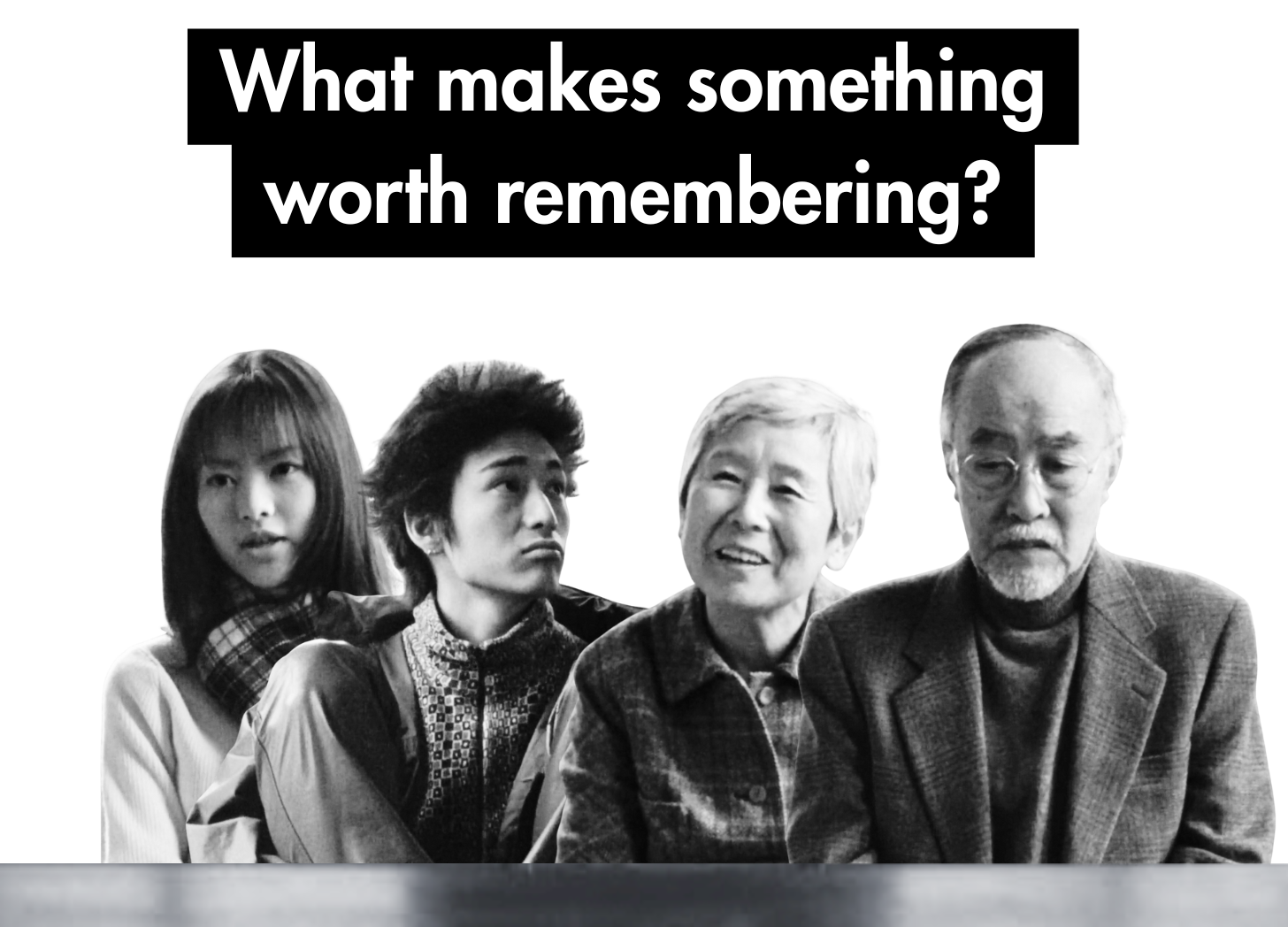
Kore-eda opens his film with a deceptively simple premise: if you could take only one memory with you into the afterlife, what would it be? After Life follows a cast of recently deceased guests at a purgatorial bureau tasked with answering precisely that question. Some of them seem to have little trouble with the query. One man knows exactly the memory (a bus ride on a hot summer day) while another immediately has a shortlist (do I have to choose just one?). But for other souls, the task at hand is impossible. One argues they have only bad memories and would rather not choose, while another is hesitant to choose because none of his memories are exceptional enough. Meanwhile, a particularly stubborn young man is insistent that it’s not that he can’t choose but that he won’t.
Inevitably, we turn the question towards ourselves—what memory would we choose?—which then leads us down our own path of reflection that parallels those of After Life’s ensemble. It’s kind of genius of Kore-eda. Without us noticing, he has also made us tenants at his purgatorial bureau, wrestling with the same existential quandary as his characters:
What makes something worth remembering?
We might assume a ‘memorable’ moment should be something epic, or cinematic. “One for the books.” Something that would make it into the movie of your life. And that’s another interesting way to look at After Life’s central inquiry—after all, the bureau’s social workers turn out to be filmmakers who adapt the deceased’s chosen memories into short films—so, quite literally, if your life were a movie, what would be in it?
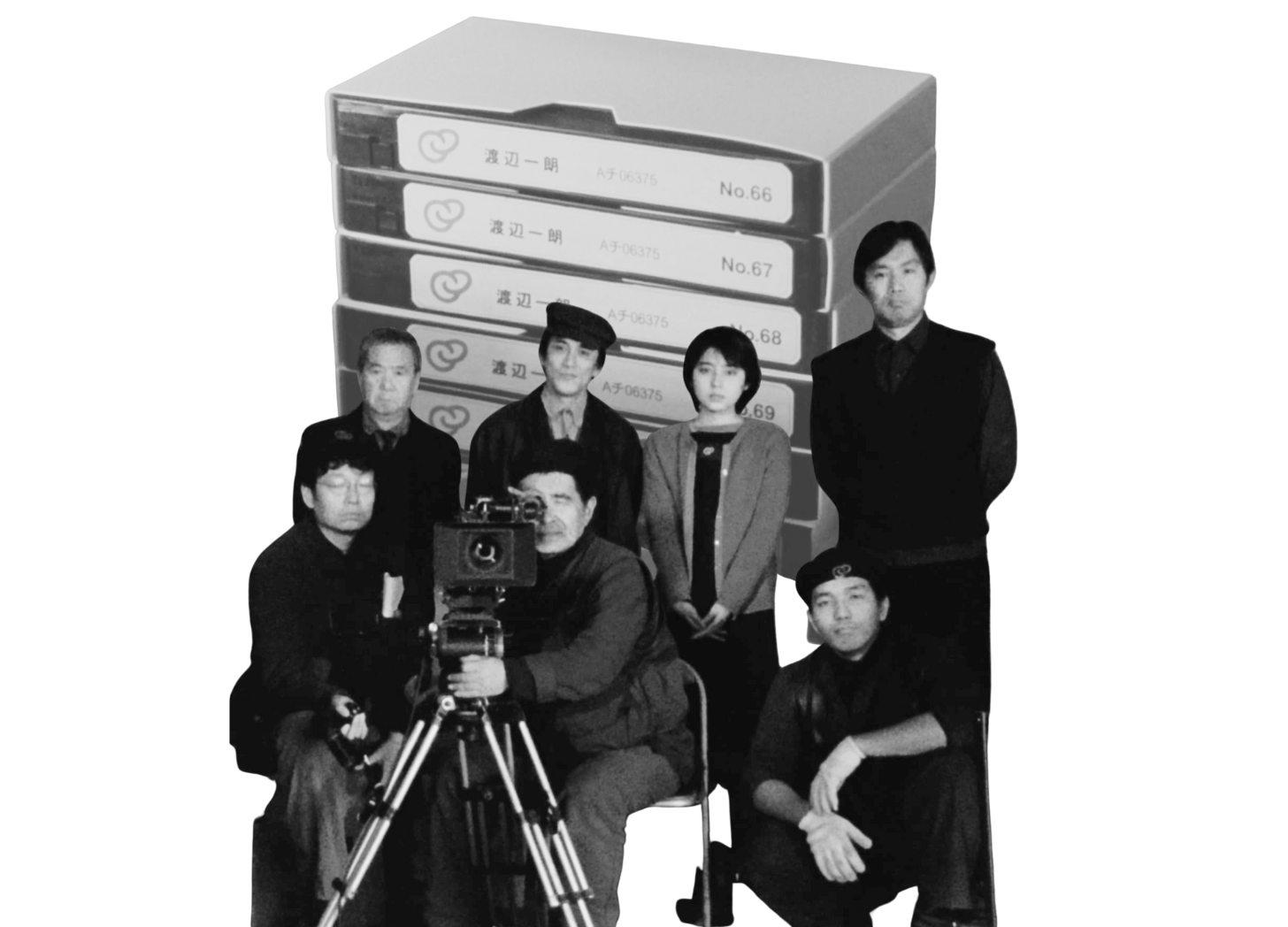
Although this way of going about it, of understanding ‘memorable’ as a kind of spectacle, implies that the chosen memory should possess a quality of novelty, rarity, or some element of specialness. This is why Watanabe has so much difficulty choosing his memory. His life just turned out to be so… ordinary.
This aversion to ordinariness is not unfamiliar to us today, 27 years after After Life premiered. Humans have always aspired towards more glamorous existences, but I’ll argue it’s worse these days. (Although we always think our time is the worst time, eh?) It’s hard not to point any fingers at social media because it’s driven our culture to normalize unattainable lifestyles. Now, not only do we yearn for a life that appears to be exciting or impressive, we also feel required to materialize it somehow.
When it turns out the only one who’ll be watching the movie
of your life is you, what then?
Social media has created the illusion that these desires—once limited to the realm of fanciful thinking—are suddenly all attainable. And because we technically can, we decide that we probably should. This results in a near insurmountable pressure to live fantastic lives and provide proof that we are living it. It’s difficult to imagine this does not influence the decisions we make and the ‘memories’ we make efforts to possess. (Almost as if memories primarily function as indicators of status or “proof of living”—and that’s just late stage capitalism, baby!)
Kore-eda asks us reevaluate. When it turns out the only one who’ll be watching the movie of your life is you, what then?
In After Life, you are invited to reimagine memory as a kind of secret poem, written in a language only you can understand. To anyone else, it is inscrutable or insignificant. But to you, it is a talisman of immense and transformative power.
It reminds me of what Rilke said about about writing poetry. He said that poems are often ruined by being written too early in one’s life. One should wait and accumulate varied experiences for a poem to even begin to emerge. And yet, it is never about the memories themselves. “You must be able to forget them . . . For the memories themselves are not important. Only when they have changed into our very blood, into glance and gesture, and are nameless, no longer to be distinguished from ourselves—only then can it happen that in some very rare hour the first word of a poem arises in their midst and goes forth from them.”
Something to ask a clubmate…
Think of your three most recent ‘memorable’ memories. What kind of moments are they?
Are there similarities among your choices? What kind of moments do you tend to file away in your memory?
Do you believe there’s an element of choice in what we remember? If so, to what extent do you think we choose?
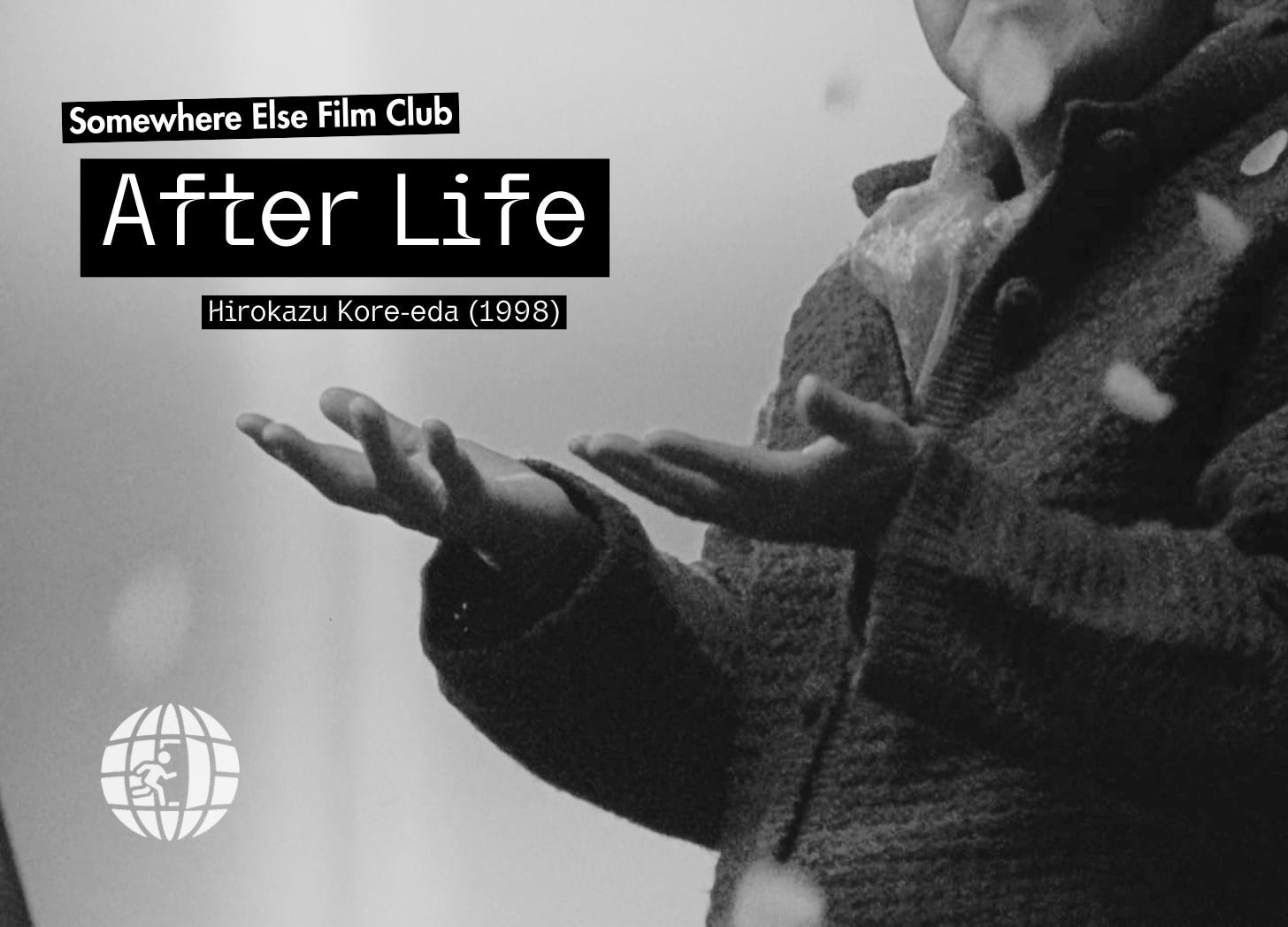
📝 This essay is from the zine we produced for film club. Every week, we work hard to write, design, and print these club zines as supplementary material for your film viewing, post-watch discussions, and general enjoyment. Some zines from previous screenings are also on sale during film clubs. Just ask us!
NOW SHOWING: Secret Kissaten: A Secret No Longer…

The kissaten is moving out of the bunker and up to Cruxbl on the 2nd flr. Now popping up from 1 to 7 pm on Fridays, Saturdays, and Sundays. Drop by for espresso + hōjicha, and our selection of nū jazz albums. (Don’t worry—the film club stays in the basement!)
BUT WHERE ELSE?—Thanks for reading WhereElse, a newsletter on media clubs + community by Somewhere Else (the bunker in a basement). This newsletter is free to read, so if you took any sort of delight in it, you are very welcome to express support by liking, commenting, sharing, or subscribing.