

Two half trouts are better than one full trout
the artistic life is better together in Aki Kaurismäki's La Vie de Bohème

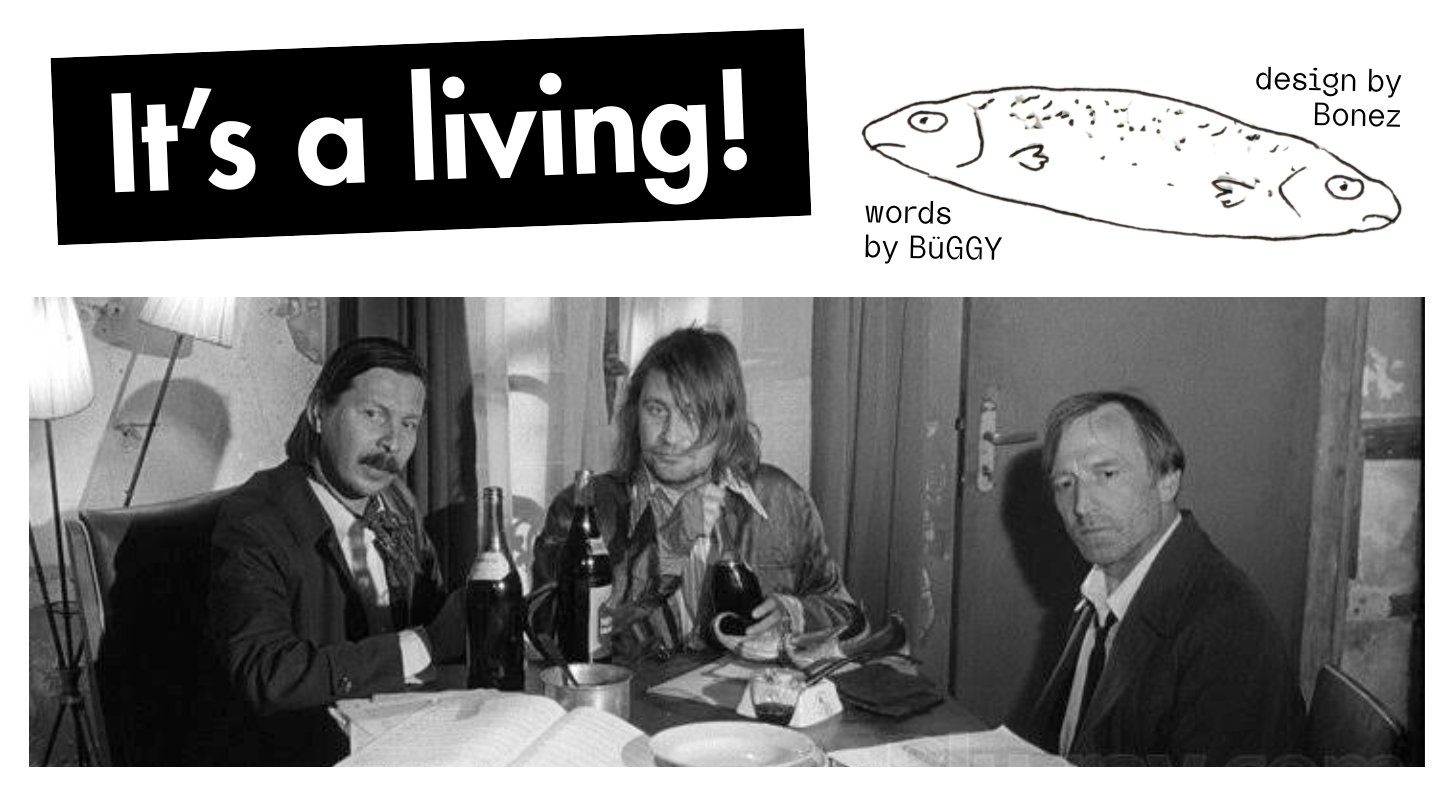
Whenever I think about Kaurismäki’s adaptation of Henri Murger’s Scenes de la vie bohème, what immediately comes to mind is a rather uneventful yet endearingly strange exchange that takes place early in the film—rather lacking in drama compared to the rest of the film, but it’s just so effectively sticky in its imagery. Never mind the usual associations with Murger’s novel—the trope of the starving artist, the futility of artistic ideals against poverty and illness, or even the artist’s stubborn idealism in spite of capitalistic oppression. I think about a two-headed trout.
When Rodolfo and Marcel meet for the first time, Marcel orders “two half trouts” at which Rodolfo comments, “That was a curious order.” Marcel explains, “On the contrary, this method yields on average a quarter more than when a full portion is ordered.”
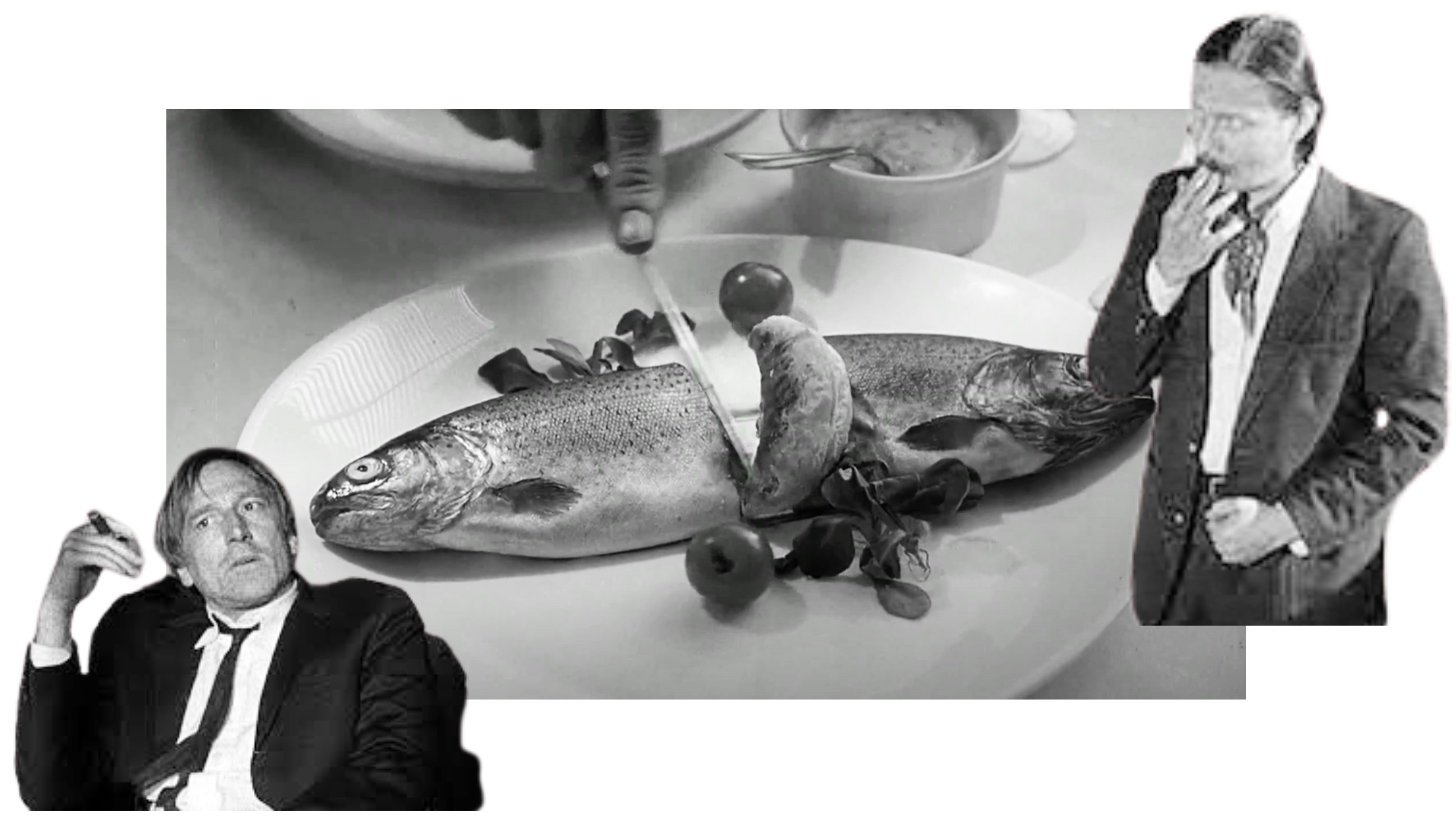
The waitress arrives with only one serving of trout, apologizing to Marcel—it turns out Rodolfo had ordered the last of their trout. Rodolfo insists on sharing the trout with Marcel, and asks if Marcel would permit him to refrain from serving him the head (the yucky part). To their surprise, the trout turns out to be bicephalic—two-headed. Rodolfo comments on the rarity of this trout, but remarks that its specialness is not enough to prevent him from eating it. Rodolfo splits the strange trout down the middle, and each eats a half with a head.
In Scenes de la vie bohème, a novel of collected vignettes, Henri Murger depicts the lives of struggling artists living in Paris’ Latin Quarter during the late 1800s. The characters were idealized versions of Murger and his real-life friends—and so writing from such a precious place, it was inevitable that he would romanticize this sort of parallel universe he had drawn up for them. Critic Lucy Sante writes, “Murger’s sentimental linking of misery and glory suddenly made many people aspire to glorious misery.”1 Murger’s bohemia possessed a quality of romantic martyrdom and saintly passion (although his idealistic characters ultimately fall victim to illness, poverty, and death—rendering bohemian ideals as ultimately unsustainable).
One of the more popular spawns of Murger’s novel is Jonathan Larson’s rock musical RENT (although technically it was more directly inspired by Giacomo Puccini’s opera La bohème—also an adaptation of Scenes de la vie bohème). RENT’s bohemia is that of a more joyful resistance. Despite facing the same woes as Murger’s protagonists—this time in an AIDS-stricken New York City in the 1990s—RENT’s ensemble responds with joyful resistance. When their landlord Benny tells them “bohemia is dead”—and to basically wake up to their reality—they respond with the rambunctious number “La Vie Bohème” which celebrates the bohemian lifestyle as one of free love and queer liberation.
Aki Kaurismäki’s bohemia is much less fun than it is in RENT. Artistic livelihood feels less like an exuberant vocation for Rodolfo, Marcel, and Schaunard and more like their only means to a living—and holding La Vie de Bohème up against the rest of Kaurismäki’s oeuvre, their artistic professions feel much like any other job taken up by his roster of working class protagonists. Known for his sensitive treatment of his proletariat heroes, Kaurismäki portrays La Vie de Bohème’s painter, playwright, and composer no different from his garbage collector, coal miner, or factory worker.2
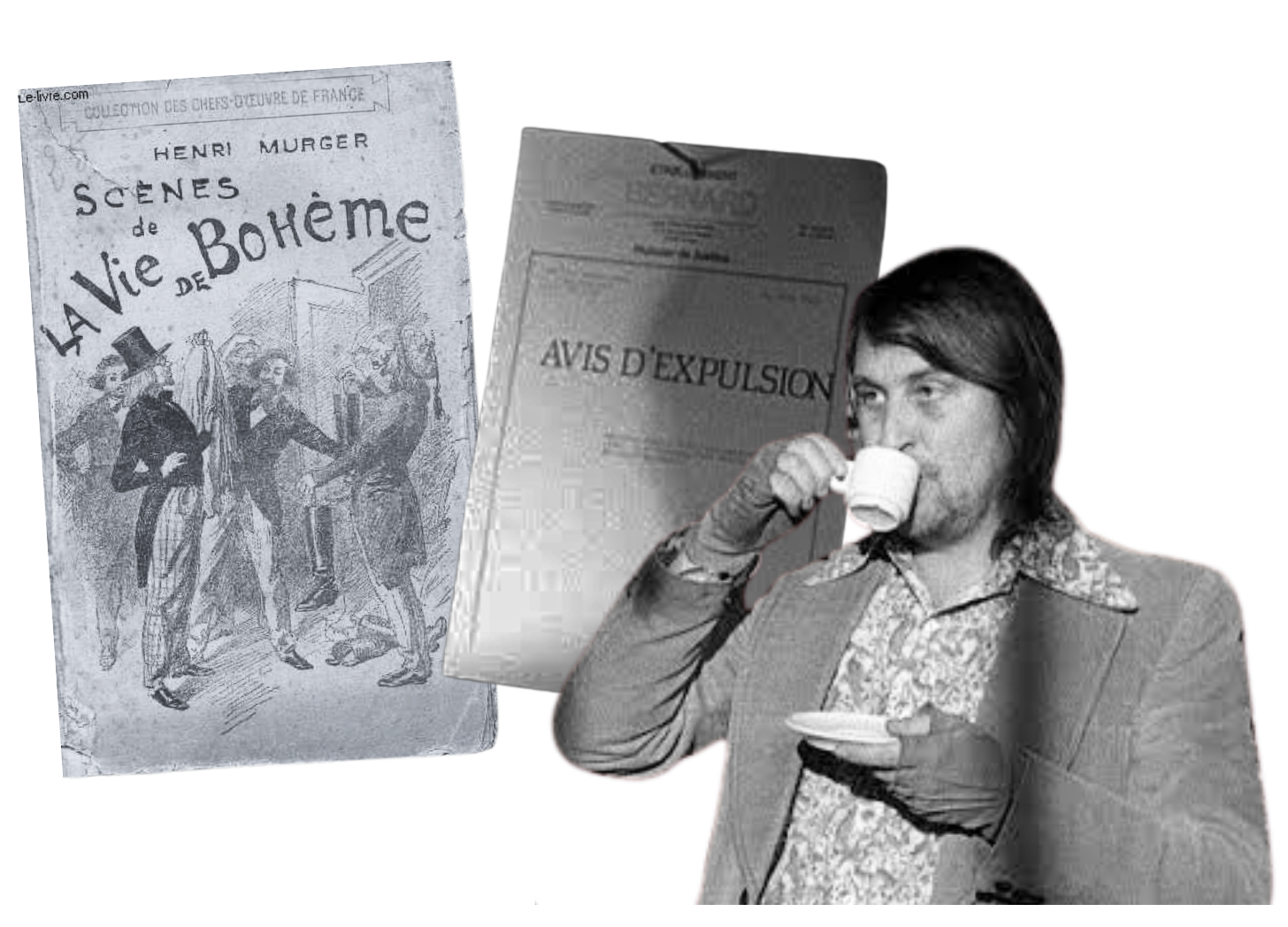
It couldn’t be farther from romantic—although there is something romantic, to me at least, about how un-romantic bohemia is in La Vie de Bohème. Kaurismäki’s bare-bones approach reconfigures bohemia’s artistic livelihood—it is not special, just different. It’s a living!—like any other. When we peer through Kaurismäki’s lens, we begin to understand how art—the excavation of beauty and the making available of it to others—is difficult and often unrewarding, but also a form of essential labor.
Whereas Murger’s Scenes de la vie bohème swings from romantic to desolate and Larson’s RENT generally maintains a bittersweet hopefulness, Kaurismäki offers us a bohemia that is more middle of the way—deadpan, no-nonsense; stripped of literary guile or theatricality. A bohemia that perhaps isn’t worth novelizing, but might just be something preferable—survivable.

And the secret to survival could appear obvious or impossible, depending on your disposition. Despite their poverty, Rodolfo, Marcel, and Schaunard are quick to pool together their money to share in a holiday feast. When Mimi falls ill, the three do not hesitate to sell their most prized possessions. For a film about the lives of artists, there is little art-making—what takes precedence is kinship, solidarity. A tight-knit togetherness that provides a degree of security and brief reprieves from struggle.
In his version of bohemia, Kaurismäki lives by the belief that putting two short ends of the stick together amounts in a joint length longer than that of one long end of the stick. Or even more obviously, two short ends are longer than one short end.
Two half trouts will always yield a quarter more than one full trout, on average. Yes, even if they’re both the halves with heads.
Ask a clubmate…
Are two halves better than a whole? Are three thirds better than a whole? What about four fourths?
Rodolfo says that the head is revered in human anatomy, but is the yuckiest part of the trout. What do you think it means that he and Marcel received a two-headed trout, which is twice as yucky, but also extremely rare?
If you could reconstruct your working life, what changes would you make? What’s the most fun way you could make a living? What kind of community do you imagine supporting and being supported by?
Is it impossible or improbable?
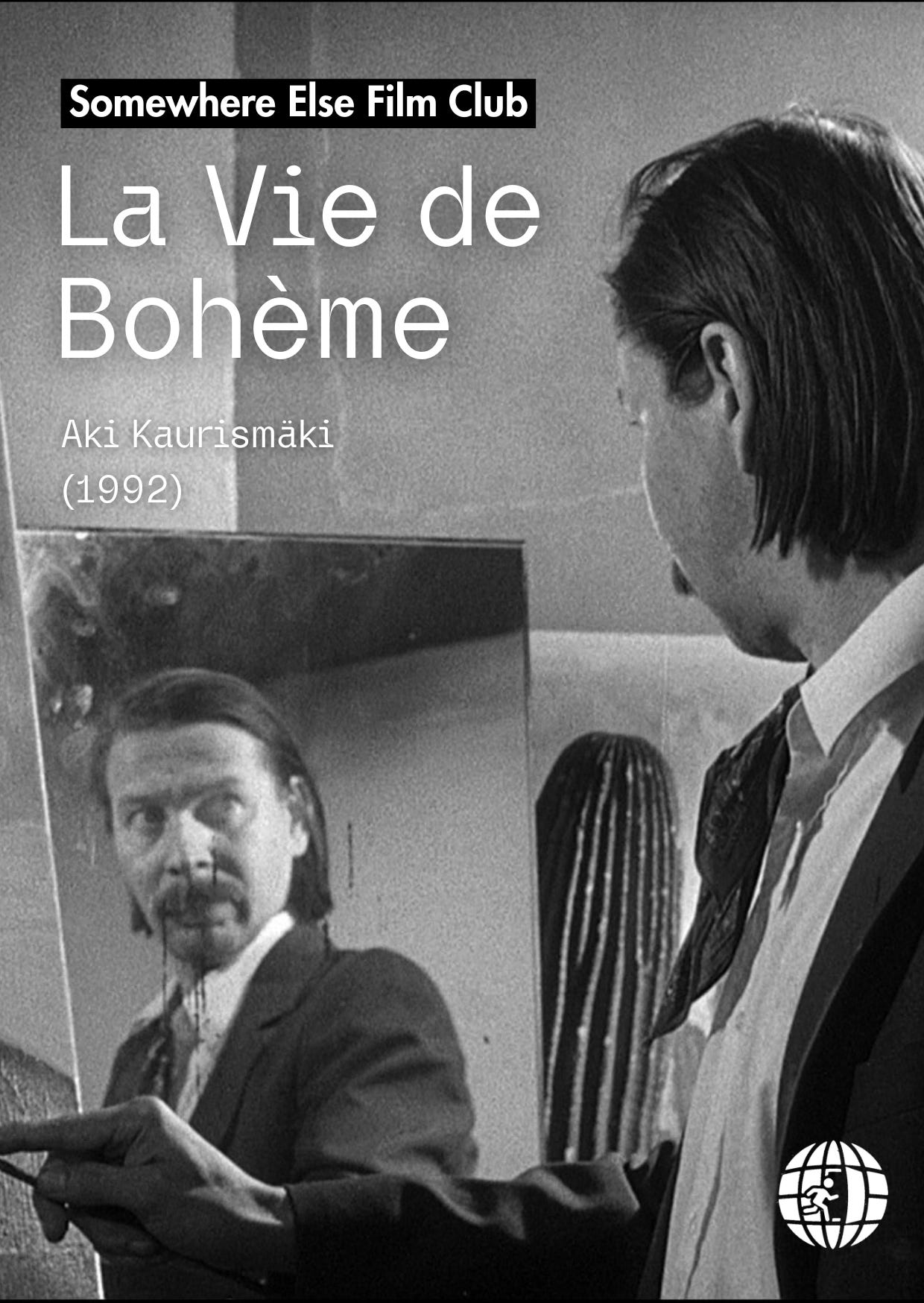
📝 This essay is from the zine we produced for film club. Every week, we work hard to write, design, and print these club zines as supplementary material for your film viewing, post-watch discussions, and general enjoyment. Some zines from previous screenings are also on sale during film clubs. Just ask us!
THIS SATURDAY: LAST FILM CLUB OF THE YEAR
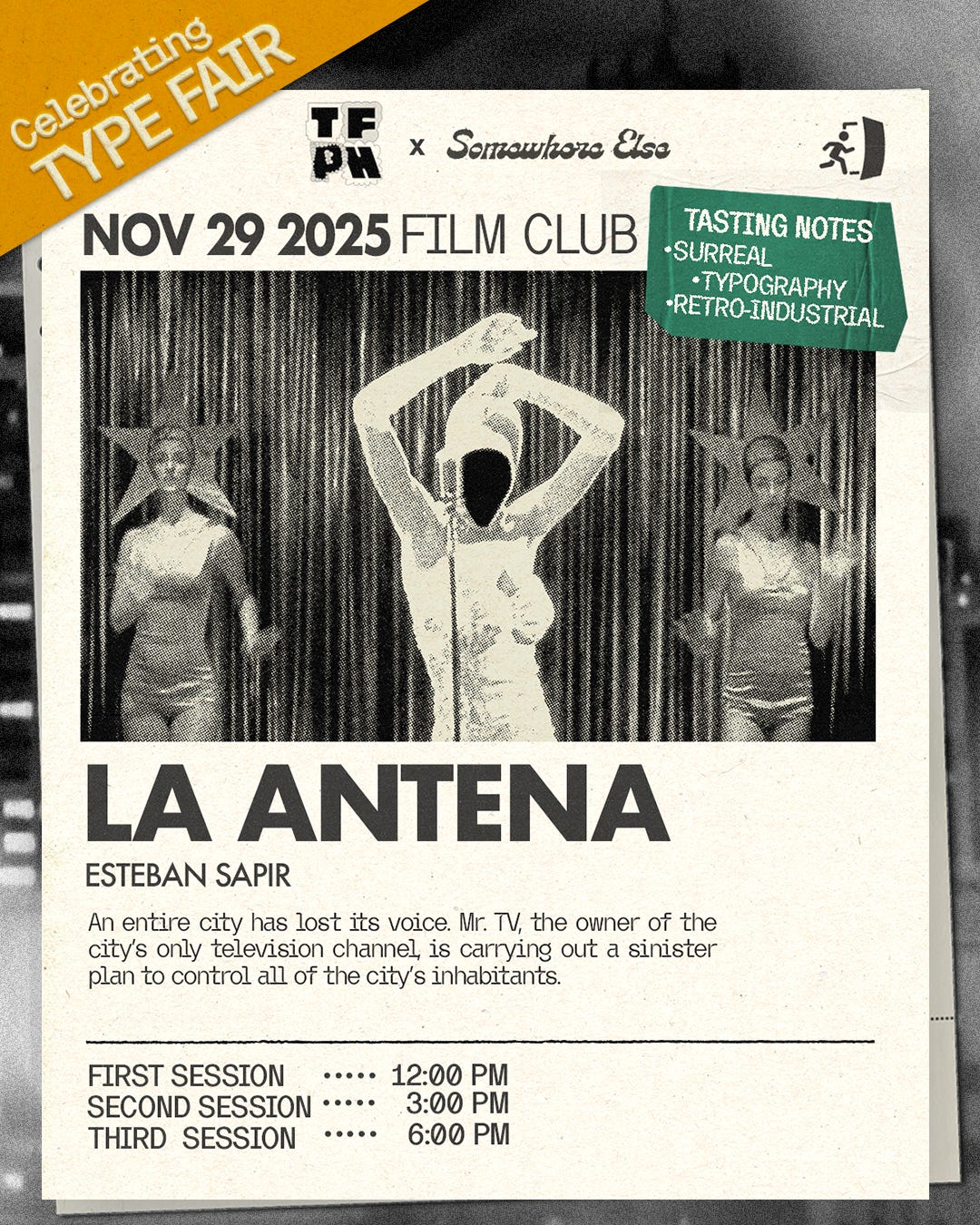
In celebration of Type Fair Philippines, we’re screening the super stylish La Antena by Argentinian director Esteban Sapir. A celebration of cinema and the power of ideas, this visually stunning cult fav is the perfect way to close out a year of film clubs.
BUT WHERE ELSE?—Thanks for reading WhereElse?, a newsletter on media clubs + community from Somewhere Else (the bunker in a basement). This newsletter is free to read, so if you took any sort of delight in it, you are very welcome to express support by liking, commenting, sharing, or subscribing.
The protagonists of The Proletariat Trilogy’s Shadows in Paradise, Ariel, and The Match Factory Girl, respectively.